

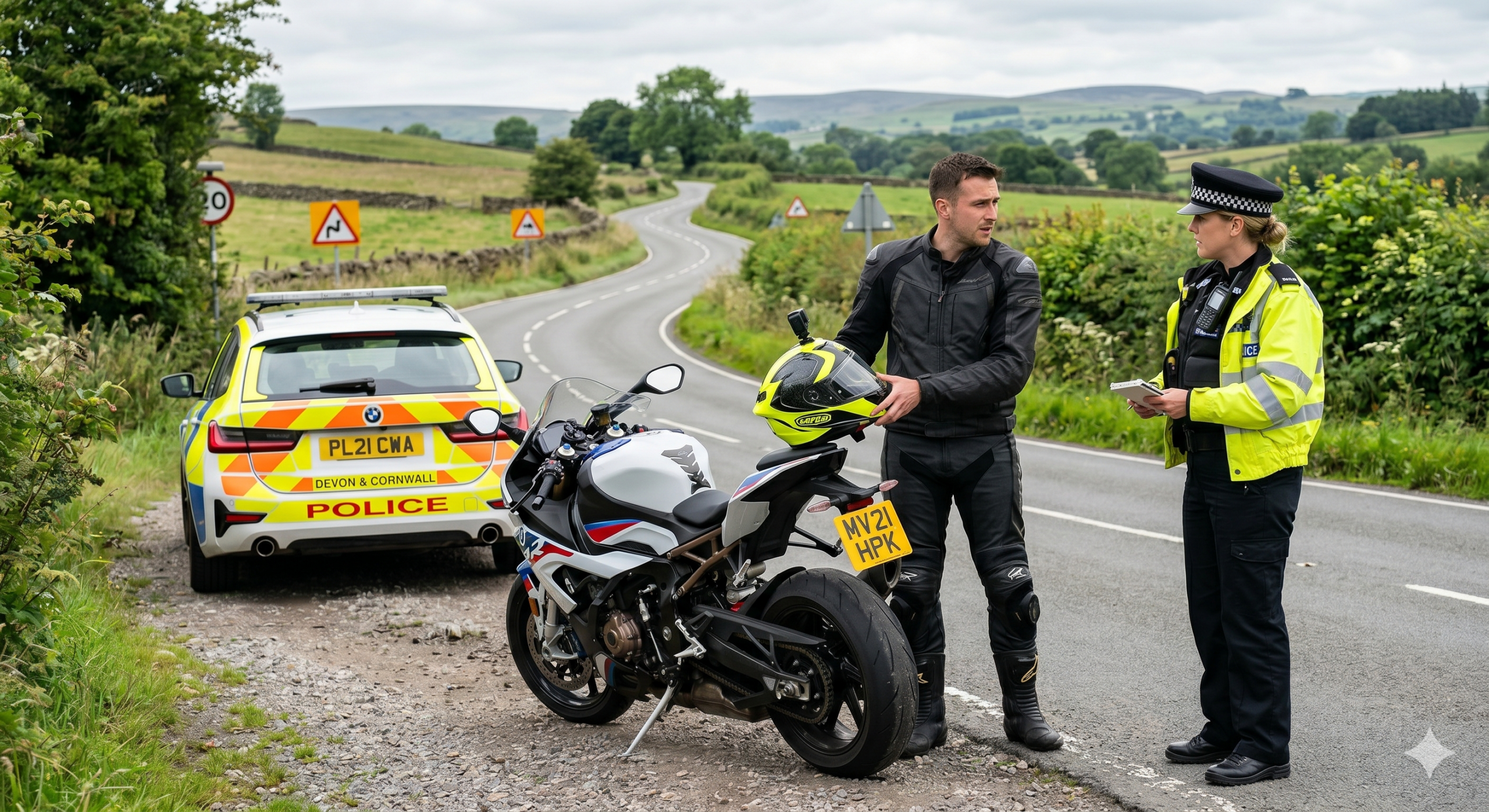
The Camera Never Lies (But Can The Police Take It?):
Your Rights Regarding Dashcams and Police Stops in the UK
Dashcams and GoPros have become an essential accessory for UK motorists and motorcyclists. They offer peace of mind, protect against “crash for cash” scams, and provide irrefutable evidence for insurance claims. But what happens when the lens is turned on you?
If you are pulled over by the police, can an officer demand to see your footage? What if they spot your camera and decide they want to take a look just in case? Understanding your rights—and the limits of police powers—is crucial for any modern driver.
Here is what the law says about the police, your cameras, and your right to privacy on the road.
Scenario 1: The Routine Stop and “Fishing Expeditions”
Does a routine stop entitle the police to look at your footage? The short answer is: No.
If the police pull you over for a routine check—such as a random breath test, a document check, or a standard vehicle condition check—they do not have an automatic right to scroll through your dashcam or GoPro footage.
The police cannot use a routine stop as an excuse to go on a “fishing expedition.” If they have no reason to suspect you have committed an offence, they cannot legally demand your camera just to see if you happened to be speeding five miles down the road. You are within your rights to politely decline a request to review your footage if no offence is suspected.
Scenario 2: Suspicion of an Offence
The situation changes drastically if the officer pulls you over because they believe you have broken the law.
If an officer suspects you of a motoring offence—such as speeding, using a mobile phone, or careless driving—they can ask to see your footage to confirm their suspicions. If you refuse, they have the legal backing to take it anyway.
Under Section 19 of the Police and Criminal Evidence Act 1984 (PACE), a police officer has the power to seize an item if:
- They have reasonable grounds to believe it is evidence relating to an offence.
- It is necessary to seize it to prevent the evidence from being concealed, lost, altered, or destroyed.
Under PACE, your vehicle is classed as “premises.” Therefore, if they suspect an offence, they can lawfully seize the camera or the SD card directly from your car or motorcycle to preserve the evidence.
Scenario 3: After an Accident (The “Hidden” Danger)
If you are involved in a road traffic collision, the police will almost certainly want to see your footage to establish liability and determine if careless or dangerous driving caused the crash. They have clear legal grounds to seize the device under PACE if you refuse to hand it over.
However, there is a major catch that catches many drivers and riders off guard: The police are not limited to just viewing the crash.
Once your SD card is in police possession, it is considered evidence. Officers can review all the files on that memory card. If you are a motorcyclist who had a collision at a roundabout, the footage of the crash might prove the other driver was at fault. But, if that same SD card contains footage of you doing 100mph, popping wheelies, or illegally crossing solid white lines thirty minutes prior, you can and will be prosecuted for those separate offences.
There are well-documented cases in the UK of riders being vindicated for a collision, only to be slapped with heavy fines, points, or driving bans because their own seized GoPro footage captured them riding recklessly earlier in the day.
What Should You Do If Stopped?
If you find yourself pulled over and an officer is eyeing your recording equipment, here is what you need to know:
- Stay Calm and Polite: Antagonizing an officer will only escalate the situation.
- Ask For Their Reasoning: If they ask for your camera during a seemingly routine stop, politely ask: “Am I suspected of committing an offence?” and “Under what power are you seizing the device?” (You are listening for them to cite Section 19 of PACE).
- Do Not Obstruct: If the officer clearly states they are seizing the camera under PACE because they suspect an offence, do not physically resist or refuse to hand it over. Doing so can lead to you being arrested on the spot for obstructing a police officer. Let them take the device; you can challenge the legality of the seizure later in court with a solicitor.
- NEVER Delete the Footage: This is the most crucial piece of advice. If you are pulled over or have an accident, do not attempt to format your SD card or delete files while the officer approaches. Destroying evidence can lead to a charge of Perverting the Course of Justice. This is a serious criminal offence that carries much harsher penalties—often resulting in a prison sentence—than a standard motoring violation.
- Seek Legal Advice: If your camera is seized, contact a specialist motoring solicitor immediately to discuss your options and ensure your rights are protected.
The Bottom Line: Your dashcam is a fantastic tool for your protection, but it is also an impartial witness. It will testify against you just as happily as it will testify for you. Ride and drive accordingly.
Back To News & Insights