

The Hidden Trap of Common Land: When a Conveyancing Solicitor’s Oversight Turns a Dream Home into a Legal Nightmare
Buying a property with planning permission for an extension or a new garage is an exciting prospect. It offers the chance to transform a house into your perfect, long-term family home. When making such a massive financial commitment, buyers rely entirely on their conveyancing solicitors to ensure the legal title is sound and the proposed plans can be lawfully implemented.
But what happens when your solicitor misses a fundamental flaw? What happens when the land you intend to build on isn’t legally yours, but is actually protected Common Land?
A recent case handled by our professional negligence team highlights the catastrophic financial and emotional consequences of conveyancing failures, and serves as a stark warning to buyers and professionals alike.
The Purchase: A Fatal Oversight
Our clients, Mr. and Mrs. A, purchased a substantial property for £450,000. The property was marketed with existing planning permission for a large double garage and workshop. They made their intentions clear to their conveyancing solicitors: they were buying the property specifically to build this garage.
Unfortunately, their solicitors committed several devastating breaches of duty:
- The Common Land Trap: The solicitors failed to identify—or properly warn the clients—that the enclosed physical frontage of the property, including the exact footprint of the proposed garage, sat outside the legal title and was registered Common Land.
- The Unanswered Query: The solicitors actually raised a query with the seller’s lawyers about land falling outside the title boundaries. However, they received no response, failed to tell the clients about the query, and inexplicably pushed the purchase through to completion anyway.
- The Missing CON29 Search: In a textbook example of negligence, the solicitors failed to conduct a standard CON29 Local Authority search. Because of this, they completely missed that a Public Right of Way (a public footpath) ran directly across the enclosed driveway.
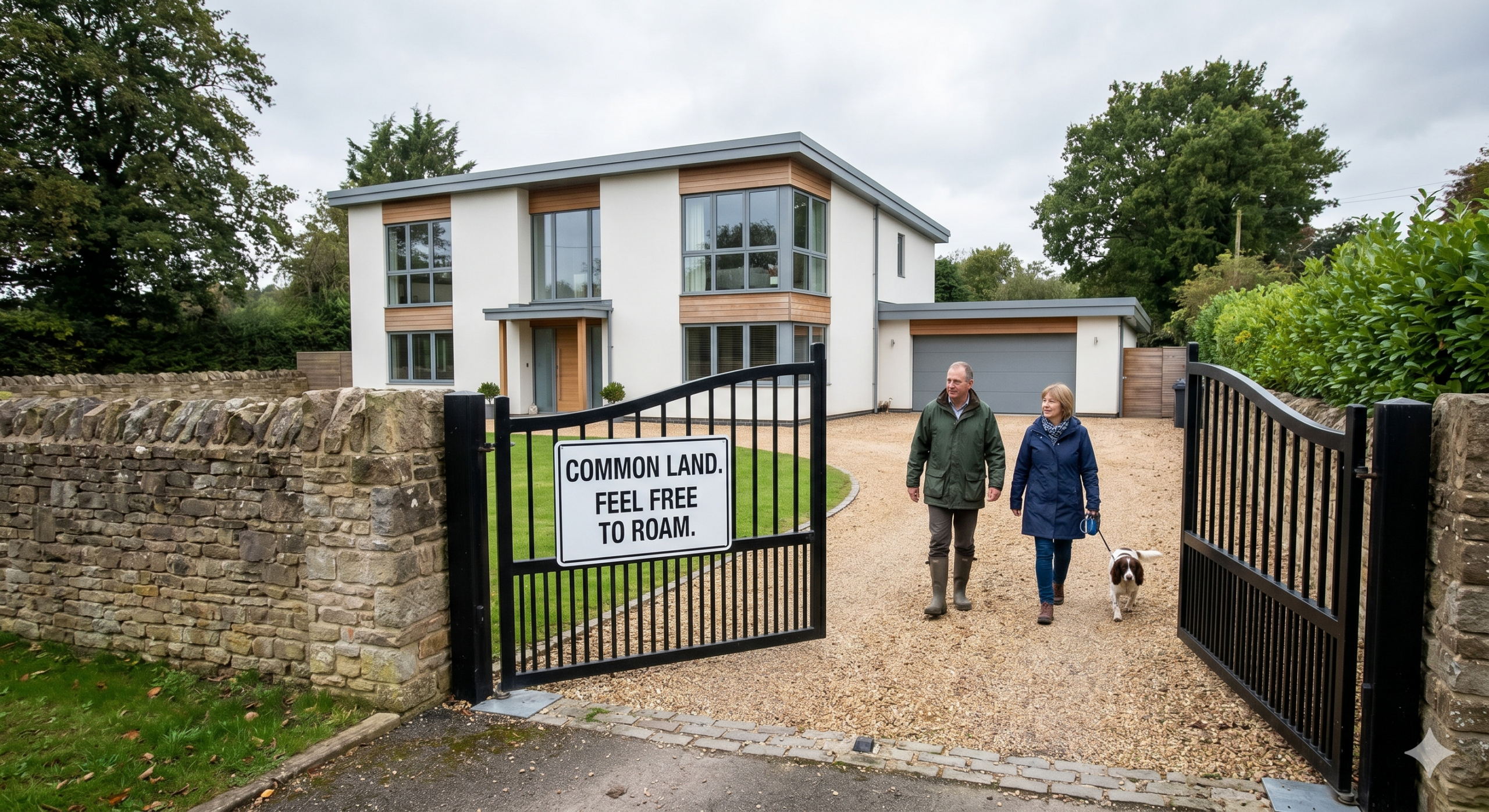
Relying entirely on the implied reassurance of their solicitors, our clients completed the purchase and spent significant funds building their double garage. They had no idea they had just constructed an unlawful building on public Common Land, directly obstructing a public highway.
The Legal Reality of Common Land
The consequences of building on Common Land are severe. Under Section 194 of the Law of Property Act 1925 and Section 38 of the Commons Act 2006, it is unlawful to construct any building, fence, or boundary on registered Common Land without explicit consent from the relevant national authority.
Furthermore, many homeowners mistakenly believe that if they occupy land for long enough, they can simply claim it through “Adverse Possession” (squatter’s rights). This is a dangerous myth when it comes to Common Land. Even if a homeowner successfully claims the “paper title” to the land via adverse possession, this does not extinguish the statutory public rights over it. The land remains Common Land, and any structures built upon it remain illegal and subject to statutory enforcement.
The Devastating Outcome
For Mr. and Mrs. A, the solicitor’s failure remained hidden for years, until a third-party investment company purchased the paper title to the Common Land and demanded £30,000 in “ransom” money, threatening legal action over the encroaching garage and boundary walls.
The situation rapidly spiraled:
- Wasted Costs: The clients wasted thousands of pounds on doomed legal attempts to claim Adverse Possession, eventually paying over £11,000 just to buy the “paper title” from the third party—which still did not solve the underlying statutory Common Land or Public Right of Way issues.
- Council Enforcement: Because the land remained a public footpath, the Local Authority intervened. The clients were served with formal enforcement notices threatening criminal prosecution and demanding they physically demolish their boundary walls and parts of their garage to allow the public through.
- Loss of Privacy and Security: The clients had to face the reality that their enclosed, private driveway was legally a public park, and strangers had a statutory right to walk right up to their front door.
- Financial Ruin: Expert surveying evidence confirmed that the un-remedied title defects, the loss of amenity, and the threat of demolition wiped in excess of £180,000 off the capital value of their home.
Seeking Justice: Professional Negligence
When a conveyancing solicitor fails to investigate a title properly, fails to conduct mandatory searches, or completes a transaction with glaring title defects unresolved, they are in breach of their professional duty of care.
Our team is currently pursuing a substantial High Court professional negligence claim on behalf of Mr. and Mrs. A. We are seeking full compensation for the diminution in the property’s value, the wasted legal and settlement costs, the physical costs of demolition and boundary reinstatement, and significant general damages for the severe distress and anxiety caused.
The Takeaway
Conveyancing is not just “box-ticking” and administrative paperwork. It is the vital legal shield that protects buyers from buying into a nightmare.
If a solicitor fails to spot a boundary discrepancy, a Common Land registration, or a Public Right of Way, the financial fallout can have a profound impact on the property’s value.
Picking the cheapest option or using a solicitor out of your locality can increase the risks of issues being overlooked.
If you have discovered a fundamental defect with your property’s title, boundaries, or planning that your solicitor failed to warn you about before you purchased, you may have grounds for a professional negligence claim. It is vital to seek specialist legal advice immediately to protect your position and recover your losses.
Read more our about professional negligence work here.
Back To News & Insights