

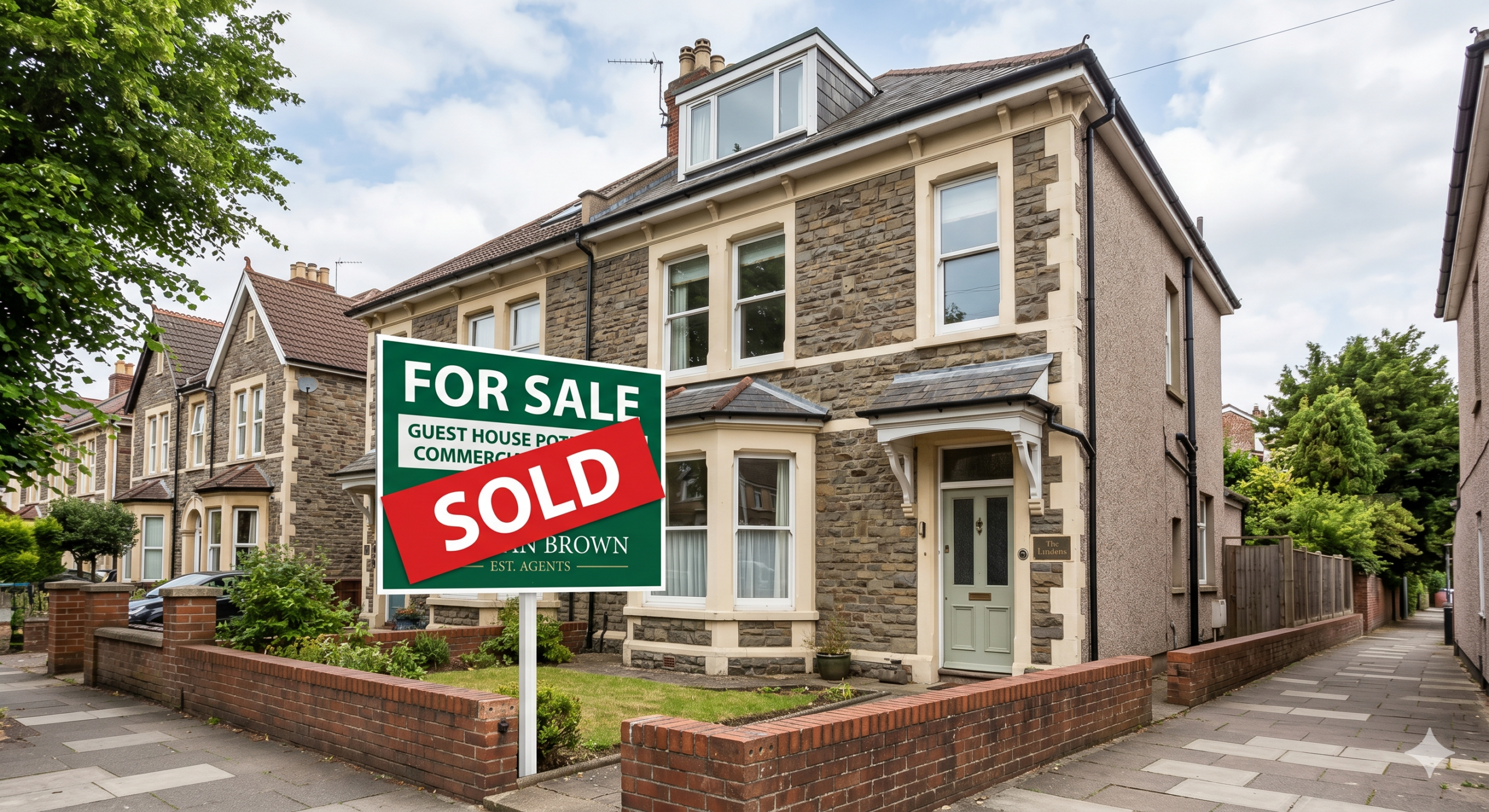
The Grey Area: When is a Commercial Guest House Assessed as a Residential Dwelling?
Understanding the Limits of the “Physical Suitability” Test in Property Land Tax Disputes
When purchasing a property with a mixed or commercial history, determining the correct property tax classification—such as Land Transaction Tax (LTT) in Wales or Stamp Duty Land Tax (SDLT) in England—can be a financial minefield. Misclassifying a property can result in unexpected tax bills, late payment interest, and penalties.
A recurring battleground between taxpayers and revenue authorities is the treatment of dormant or repurposed commercial assets, such as former guest houses or B&Bs. When a business closes its doors and the building is sold, is it taxed as a commercial property, or does it revert to being a residential “dwelling”?
A recent legal dispute highlights the aggressive stance tax authorities are taking, the specific case law they rely on, and why their interpretation is not always the definitive answer.
The Scenario: The Dormant Guest House
Consider a common scenario: A corporate buyer purchases a large period property. Historically, the property operated legally and continuously as a commercial guest house for decades, paying business rates.
However, prior to the sale, the commercial enterprise ceased trading. The property sat largely dormant, though the vendor may have allowed informal, unauthorized use of the rooms as transient bedsits. The buyer—relying on commercial lending criteria, a surveyor’s valuation noting the guest house layout, and the property’s historic commercial status—files their property tax return applying the lower non-residential/mixed-use rates.
The tax authority opens an enquiry, challenging this classification. They argue that the property is “residential” and demand the Higher Residential Rates (which include a substantial corporate surcharge).
The Tax Authority’s Argument: The Ball & Torokoff Precedent
Tax authorities often base their challenges on the statutory definition of a dwelling, which includes any building that is “used or suitable for use as a single dwelling.” To enforce this, authorities have recently begun leaning heavily on the First-tier Tribunal decision in Ball & Torokoff v Revenue Scotland [2024] FTSTC 6.
In Ball & Torokoff, the Tribunal assessed a large historic property that had last been used as commercial offices and was vacant at the time of completion. The Tribunal ruled that the property was nevertheless residential because it remained physically suitable for use as a dwelling.
Using this precedent, a tax authority will typically argue that:
- Physical Layout is King: If a building has bedrooms, bathrooms, and a domestic structure, it is physically suitable for residential occupation.
- Actual Use is Secondary: Whether the property was vacant, or whether its most recent use (e.g., unauthorized bedsits) lacked planning consent, is irrelevant to its physical suitability.
- Historic Commercial Use is Not Decisive: The fact that the property used to be a trading business does not permanently strip it of its residential nature if the underlying structure remains domestic.
Under this strict “physical suitability” test, revenue authorities argue that a former guest house is, by its very nature, a form of residential accommodation and should be taxed as such.
The Flaw in the Argument: Statutory Exceptions for Hospitality
While Ball & Torokoff is a binding precedent for former office spaces, applying it as a blanket rule to former hotels or guest houses represents a significant legal vulnerability for tax authorities.
Here is why the tax authority’s reliance on the physical suitability test is not a definitive answer in these specific cases:
1. The “Hotel and Guest House” Carve-Out Under property tax legislation (such as Section 72(5) of the Land Transaction Tax and Anti-avoidance of Devolved Taxes (Wales) Act 2017), there are explicit statutory exceptions to the definition of a dwelling. The legislation explicitly states that a building used as “a hotel or similar establishment” is not used as a dwelling.
2. The Disapplication of the Suitability Test Crucially, the legislation goes a step further. It states that if a building falls into one of these exempt categories (like a guest house), no account is to be taken of its physical suitability for any other use.
Therefore, if a property’s lawful, permitted use is a guest house, the statute legally prohibits the tax authority from applying the physical “suitability test.” The precedent set in Ball & Torokoff—which focuses almost entirely on physical suitability—is arguably incompatible with properties protected by this specific statutory carve-out.
3. Lawful vs. Unlawful Use Tax authorities frequently argue that if a former guest house was being used informally as residential bedsits immediately prior to sale, this “actual use” triggers residential tax rates. However, if that bedsit use was unauthorized and lacked formal planning consent for a Change of Use, a strong argument can be made that the property remained a dormant commercial asset. A tax tribunal must carefully weigh whether an unlawful, transient use can override decades of legal commercial history and statutory protections.
The Takeaway for Property Investors
The line between a “dormant commercial asset” and a “residential dwelling” is incredibly thin and heavily dependent on the specific facts at the effective date of the transaction.
If a tax authority challenges your non-residential classification, they will likely deploy the Ball & Torokoff precedent to argue that physical layout trumps all. However, as demonstrated above, this argument has distinct limitations when dealing with properties that have hospitality histories, commercial infrastructure (such as commercial fire alarms), and specific statutory exceptions.
How to Protect Yourself:
- Gather Evidence Early: Do not rely solely on the physical appearance of the property. Secure Valuation Office Agency (VOA) records showing historic Business Rates, previous commercial insurance policies, and confirmation of planning use classes.
- Assess Commercial Infrastructure: Document features that make the property unsuitable for a single family, such as commercial-grade fire panels, excessive en-suites, or commercial catering kitchens.
- Seek Specialist Advice: Property tax is highly nuanced. Ensure your conveyancer or tax advisor documents their reasoning for applying non-residential rates before filing, as this “reasonable care” is your primary defense against inaccuracy penalties if the tax authority subsequently opens an enquiry.
If you are currently facing a property tax enquiry or are planning to purchase a property with a mixed commercial and residential history, contact our specialist tax dispute team today to discuss your position.
Back To News & Insights